

Diving into scripture to understand biblical baptism opens up a rich world of faith, renewal, and obedience. You will find that studying over 30+ Bible verses that explain biblical baptism clarifies both its symbolic weight and its foundational role in Christian life. Believers often search these passages to resolve questions about water immersion, spiritual transformation, and the washing away of sins.
Every single verse contributes a vital piece to a larger mosaic. Let us examine the exact texts that define this sacred practice from Genesis to Revelation.
Old Testament Shadows and Prophetic Foreshadowing
While Christian baptism originates in the New Testament, early Hebrew scriptures establish profound patterns of water, cleansing, and salvation. These passages form the baseline for how biblical writers view the spiritual reality behind physical washing.
Water serves as an instrument of both judgment and rescue throughout ancient history. Consider these foundational Old Testament texts:
- Genesis 1:2 – The Spirit of God moved over the face of the waters, establishing water as the starting place of creation.
- Genesis 7:17-18 – Noah’s flood used water to wash away wickedness, a type of baptism that Peter later explicitly references.
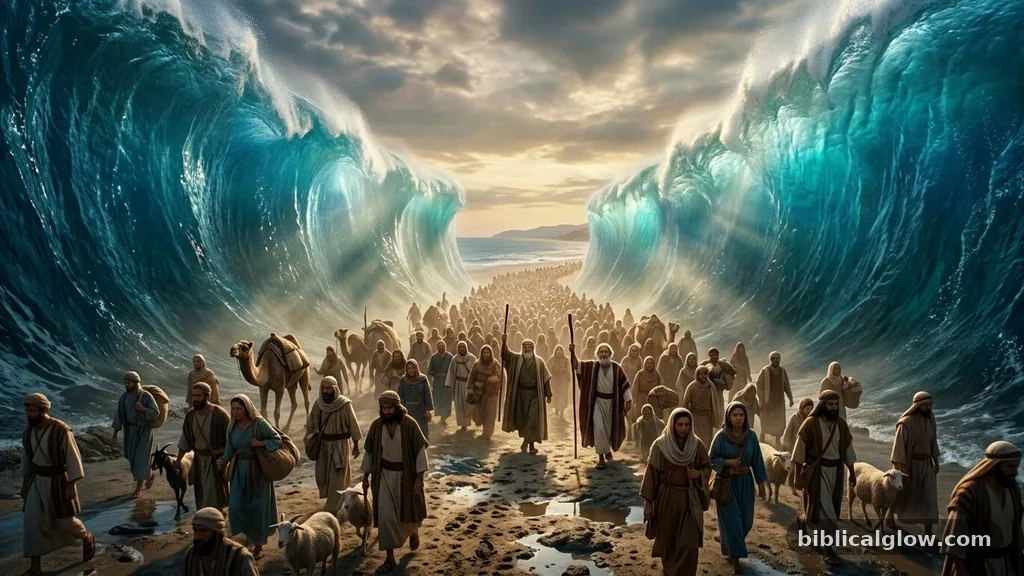
- Exodus 14:21-22 – The Israelites passed safely through the Red Sea, walking through walls of water into a new national identity.
- Leviticus 14:8-9 – Priests performed ritual washings with water before approaching sacred spaces, signaling moral purity.
- 2 Kings 5:14 – Naaman dipped seven times in the Jordan River and received physical healing through complete obedience.
- Ezekiel 36:25-26 – God promised to sprinkle clean water on His people and give them a brand-new heart.
- Zechariah 13:1 – A fountain would be opened for the house of David to cleanse people from sin and impurity.
These early accounts prove that God uses physical elements to accomplish profound spiritual realities. Water consistently marks a boundary line between an old life and a transformed future.
New Testament Foundations: John the Baptist and Jesus
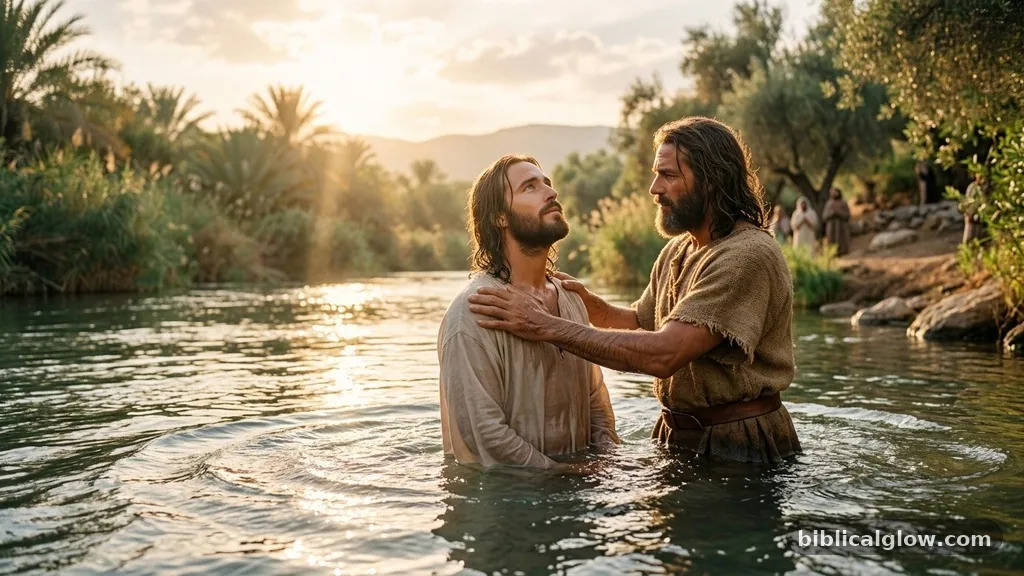
The New Testament shifts from prophetic shadow to direct reality. John the Baptist introduced a baptism of repentance in the wilderness, preparing hearts for the arrival of the Messiah.
Jesus Himself submitted to this rite, endorsing it fully. These critical verses anchor the practice in the life and ministry of Christ:
- Matthew 3:13-17 – Jesus came from Galilee to the Jordan to be baptized by John, and the heavens opened.
- Mark 1:4-5 – John appeared in the wilderness preaching a baptism of repentance for the forgiveness of sins.
- Luke 3:21-22 – While Jesus was praying after His baptism, the Holy Spirit descended on Him in bodily form.
- John 3:23 – John also was baptizing at Aenon because water was plentiful there, pointing to immersion.
- John 4:1-2 – Although Jesus Himself did not baptize with His hands, His disciples performed many baptisms.
When Jesus stepped into the Jordan River, He identified completely with sinful humanity despite having no sin of His own. His action sanctified the waters of baptism for all who follow Him.
The Great Commission and Apostolic Practice
Following His resurrection, Jesus gave His followers a clear mandate to baptize disciples from every nation. The Book of Acts records how the early church immediately put this command into action on the Day of Pentecost and beyond.
The apostles consistently connected turning away from sin with going under the water. Review these key directives and historical accounts:
- Matthew 28:19 – Go therefore and make disciples of all nations, baptizing them in the name of the Father and of the Son and of the Holy Spirit.
- Mark 16:16 – Whoever believes and is baptized will be saved, but whoever does not believe will be condemned.
- Acts 2:38 – Peter said to them, Repent and be baptized every one of you in the name of Jesus Christ for the forgiveness of your sins.
- Acts 2:41 – Those who received his word were baptized, and there were added that day about three thousand souls.
- Acts 8:12-13 – When they believed Philip preaching good news, they were baptized, both men and women.
- Acts 8:36-38 – The Ethiopian eunuch saw water and asked, What prevents me from being baptized? So they both went down into the water.
- Acts 9:18 – Immediately something like scales fell from Saul’s eyes, and he rose and was baptized.
- Acts 10:47-48 – Can anyone withhold water for baptizing these people who have received the Holy Spirit just as we have?
- Acts 16:15 – After Lydia was baptized, along with her household, she urged us to stay at her home.
- Acts 16:33 – The jailer took them the very hour of the night and washed their wounds; and he was baptized at once.
- Acts 18:8 – Crispus, the ruler of the synagogue, believed in the Lord, together with his entire household. And many of the Corinthians hearing Paul believed and were baptized.
- Acts 19:4-5 – On hearing this, they were baptized in the name of the Lord Jesus.
- Acts 22:16 – Rise and be baptized and wash away your sins, calling on his name.
Notice the urgency in these passages. Believers in the early church did not delay their public profession of faith.
The Theological Meaning of Baptism in the Epistles
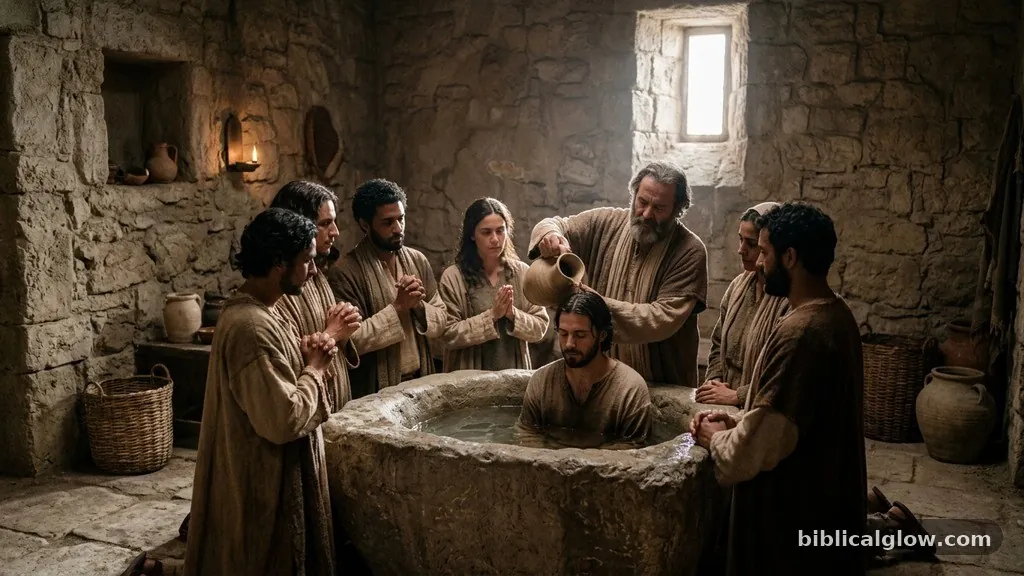
The letters of the New Testament unpack the deep spiritual mechanics behind the water. Paul and Peter explain that physical immersion mirrors the death, burial, and resurrection of Jesus Christ.
These texts reveal how baptism unites believers with Christ in His death. Study these profound theological explanations:
- Romans 6:3-4 – We were buried therefore with him by baptism into death, in order that, just as Christ was raised from the dead, we too might walk in newness of life.
- 1 Corinthians 12:13 – For in one Spirit we were all baptized into one body—Jews or Greeks, slaves or free.
- Galatians 3:27 – For as many of you as were baptized into Christ have put on Christ.
- Ephesians 4:4-5 – There is one body and one Spirit… one Lord, one faith, one baptism.
- Colossians 2:12 – Having been buried with him in baptism, in which you were also raised with him through faith in the powerful working of God.
- Titus 3:5 – He saved us, not because of works done by us in righteousness, but according to his own mercy, by the washing of regeneration and renewal of the Holy Spirit.
- 1 Peter 3:21 – Baptism, which corresponds to this, now saves you, not as a removal of dirt from the body but as an appeal to God for a good conscience.
The theological picture here is stunning. Going under water symbolizes burial, and rising up symbolizes resurrection power at work in a believer’s everyday life.
Comparing Perspectives on Biblical Baptism

Believers throughout church history have debated certain nuances regarding administration and timing. Examining how different traditions interpret these scriptures helps clarify why various Christian denominations practice the rite differently.
| Perspective | Primary Scriptural Basis | Core Practice |
|---|---|---|
| Believer’s Baptism (Credobaptism) | Acts 2:38, Mark 16:16, Acts 8:38 | Immersion of conscious believers who make a personal profession of faith. |
| Infant Baptism (Paedobaptism) | Acts 16:15, Acts 16:33, Genesis 17:7 | Sprinkling or pouring water over infants of believing parents as a covenant sign. |
Both viewpoints rely heavily on scriptural arguments, yet they arrive at different conclusions regarding covenant continuity and the exact age of accountability.
Answering Topical Gaps: Common Hard Questions About Baptism
Readers often wrestle with specific scenarios not explicitly detailed in a single verse. Addressing these contextual gaps provides absolute clarity on difficult biblical questions.
Is water baptism strictly required for salvation?
Scripture consistently links belief, repentance, and baptism together as the normal response to the gospel. However, passages like Luke 23:43, where Jesus promises paradise to the dying thief on the cross without mentioning water, demonstrate that salvation fundamentally rests on grace through faith alone. Water baptism acts as the outward sign and urgent command of an inward transformation, not a mechanical merit badge.
What formula should ministers use when baptizing?
Matthew 28:19 commands baptism in the name of the Father, the Son, and the Holy Spirit. Meanwhile, several texts in Acts mention baptizing in the name of Jesus Christ. Scholars generally agree that the Acts passages serve as a shorthand way to distinguish Christian baptism from John’s baptism or Jewish ritual washings, rather than prescribing a rigid verbal formula that invalidates other trinitarian wording.
Conclusion
Exploring these 30+ Bible verses that explain biblical baptism reveals a consistent thread of faith, cleansing, and new life running through the entire Bible. Whether you are preparing to take this step yourself or simply studying church history, these scriptures offer a rock-solid foundation for understanding how God uses water to mark His people.
Take time to prayerfully reflect on these passages and consider what your next step of obedience looks like today. Reach out to a local church leader if you feel ready to declare your faith through the waters of baptism.
Frequently Asked Questions
Does baptism wash away sins directly?
Passages like Acts 2:38 and Acts 22:16 connect baptism with the washing away of sins. However, theology distinguishes between the physical water and the blood of Christ. Baptism symbolizes and seals the spiritual cleansing that occurs through faith in Jesus.
Should a person be sprinkled or fully immersed?
The Greek word baptizo literally means to dip, plunge, or immerse. Historical context, archaeological findings of ancient baptisteries, and symbolism regarding burial and resurrection strongly indicate that full water immersion was the standard practice in the early church.
Can someone be baptized more than once?
Most Christian traditions view baptism as a one-time event that mirrors a person’s spiritual birth. However, individuals sometimes choose rebaptism if their initial immersion occurred before they truly understood the gospel or if they strayed significantly and returned to the faith.